
Hey all! Real Farmer Jeff here.
In my time gardening, I have found that potting-up my plants once before planting outside is ideal for maximum harvests. I’ll touch on why exactly in this blog post!
I especially love doing this with my tomato plants because tomatoes are rare in that if you plant the stem, additional roots will come from the stem. Consequently, potting up tomatoes helps to supercharge the roots!
In this blog post, I am going to cover why all plants can benefit from up-potting so that they don’t become root-bound and stunted. Additionally, I’m going to talk about my two favorite up-potting amendments which are liquid fish fertilizer and mycorrhizae (beneficial fungi).
Let’s get started!
What Is Up-Potting?
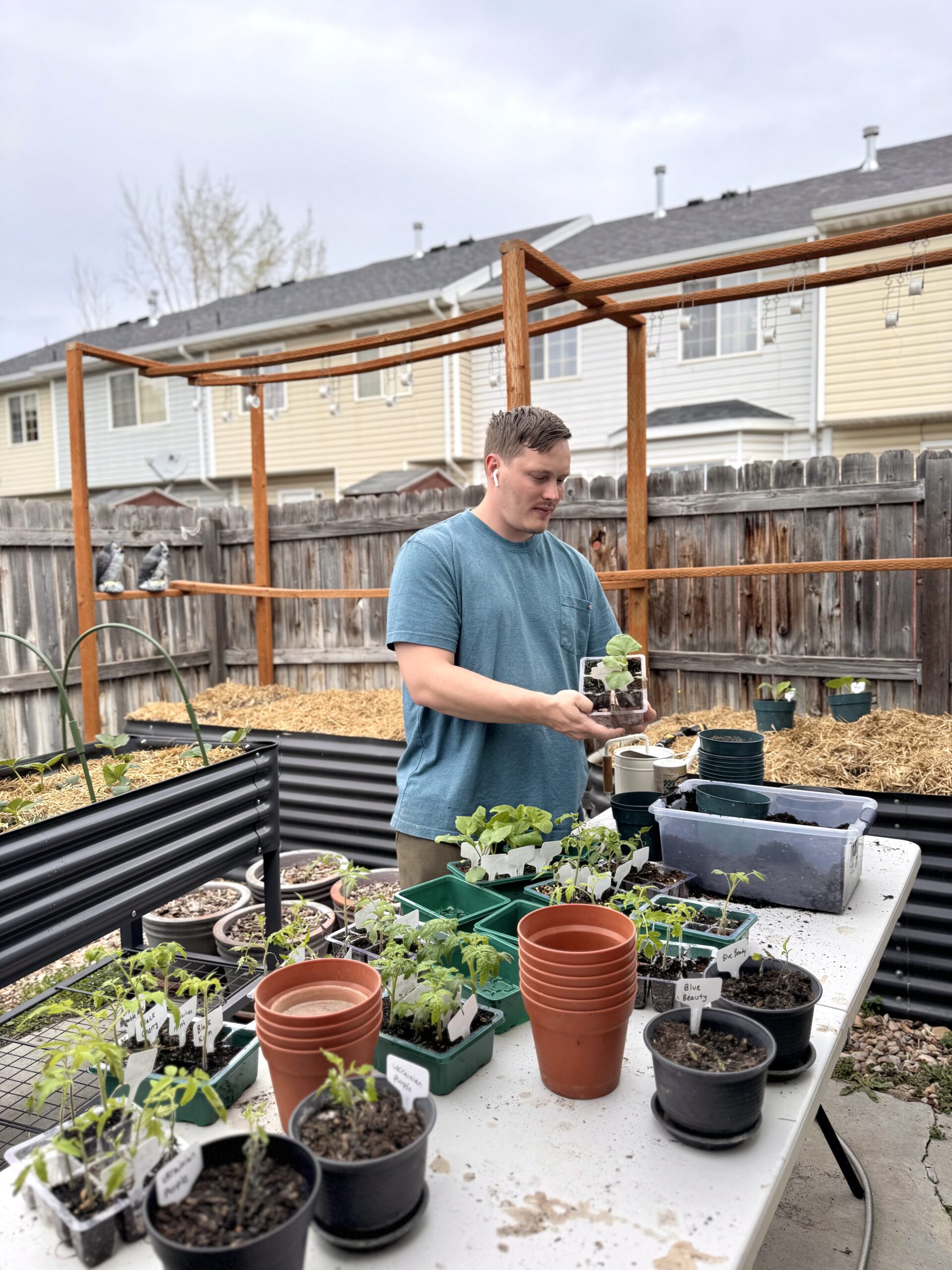
Up-potting (also called potting up) is the process of transplanting seedlings from their current smaller containers into larger ones to give them more space to grow before they are moved to their final location, such as a garden bed or large pot.
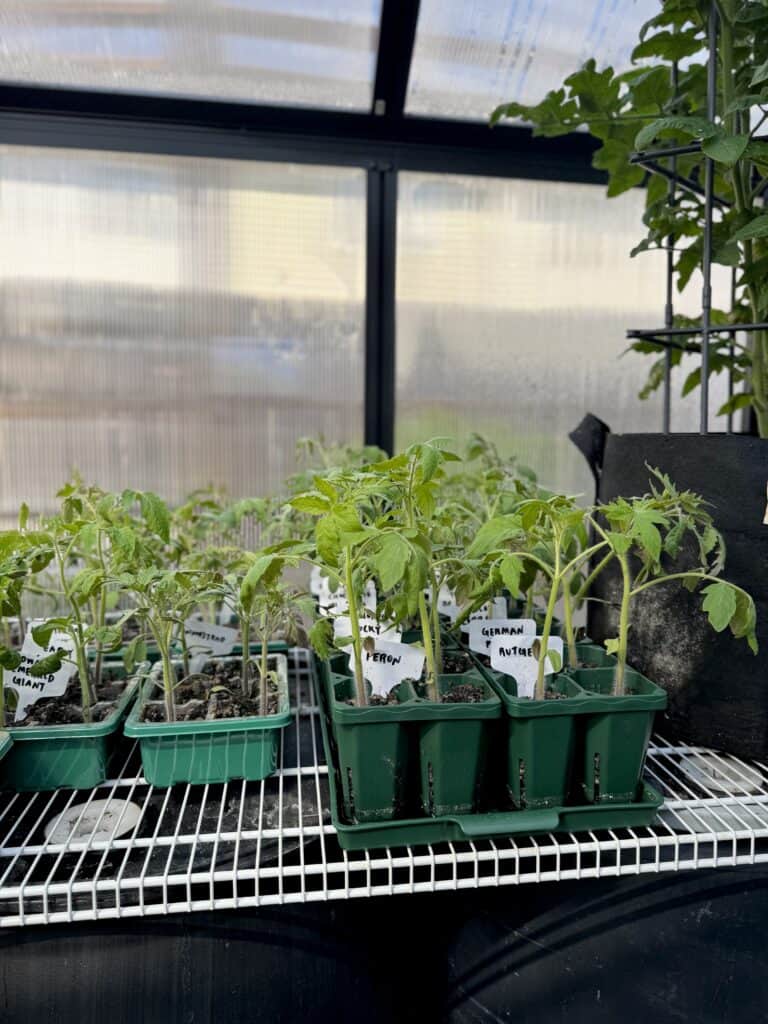
When you first start seeds, they’re often sown in small seed trays or starter cells. As the seedlings grow, they can outgrow these tiny spaces.
Up-potting involves gently moving the seedling – roots, soil, and all – into a larger container with fresh soil to encourage continued healthy growth.
Main Benefits of Up-Potting
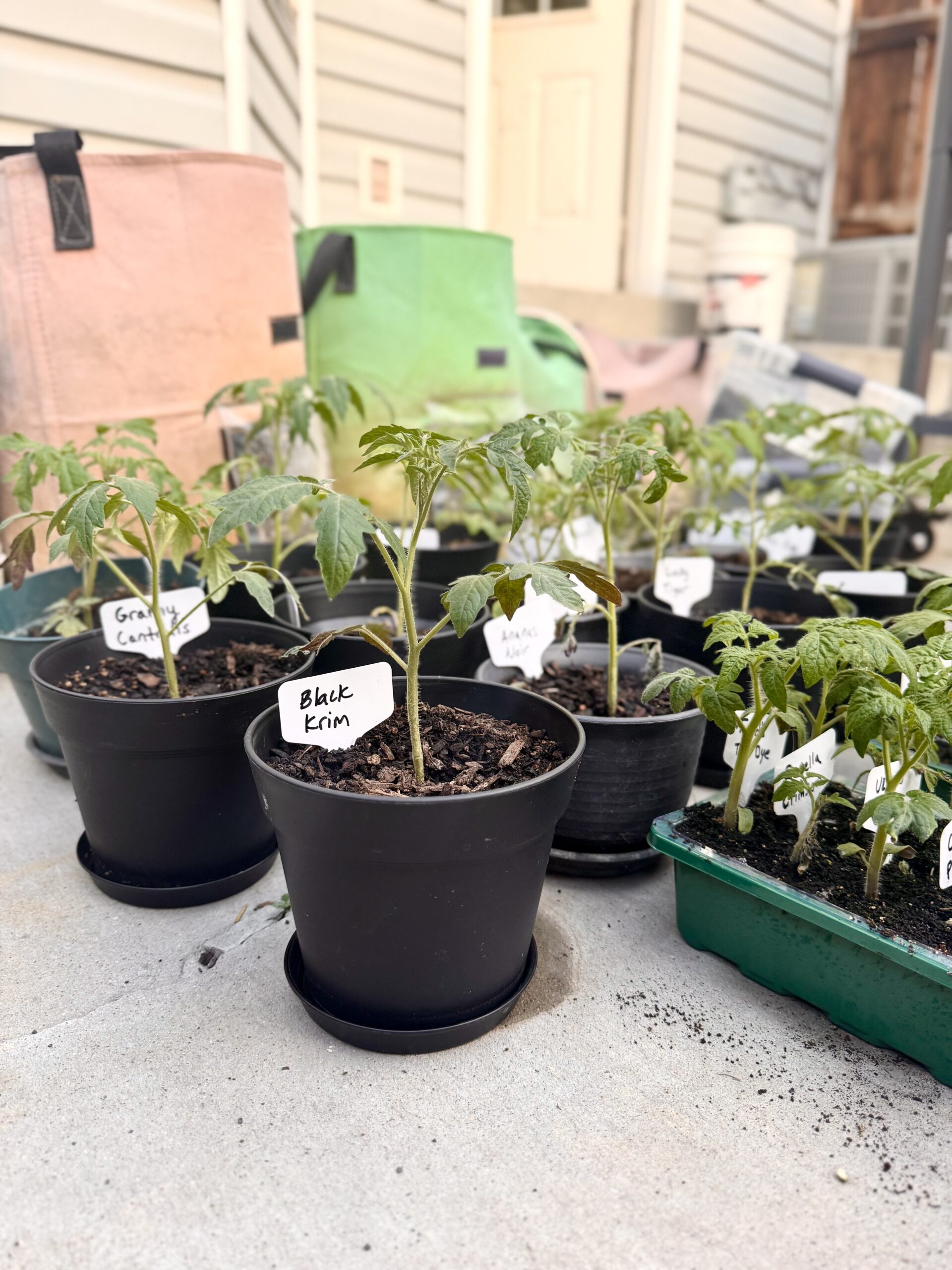
- Promotes Strong Root Development: A larger container allows the roots to spread out instead of circling around the inside of a small pot. This leads to a stronger, healthier root system.
- Prevents Root-Bound Plants: When roots hit the sides of a small pot and have nowhere to go, they can become root bound, which stresses the plant and stunts growth. Up-potting gives them breathing room.
- Provides Fresh Nutrients: New soil in a bigger pot refreshes the plant’s nutrient supply, giving the seedling a nutrient boost to support its next stage of growth.
- Reduces Stress at Final Transplant: A well-established plant with strong roots will experience less transplant shock when moved to the garden or a larger container.
- Allows for Stronger Top Growth: As roots develop, so does the above-ground part of the plant. Up-potted seedlings tend to become stockier and more resilient than those left in cramped containers.
When to Up-Pot Vegetable Seedlings
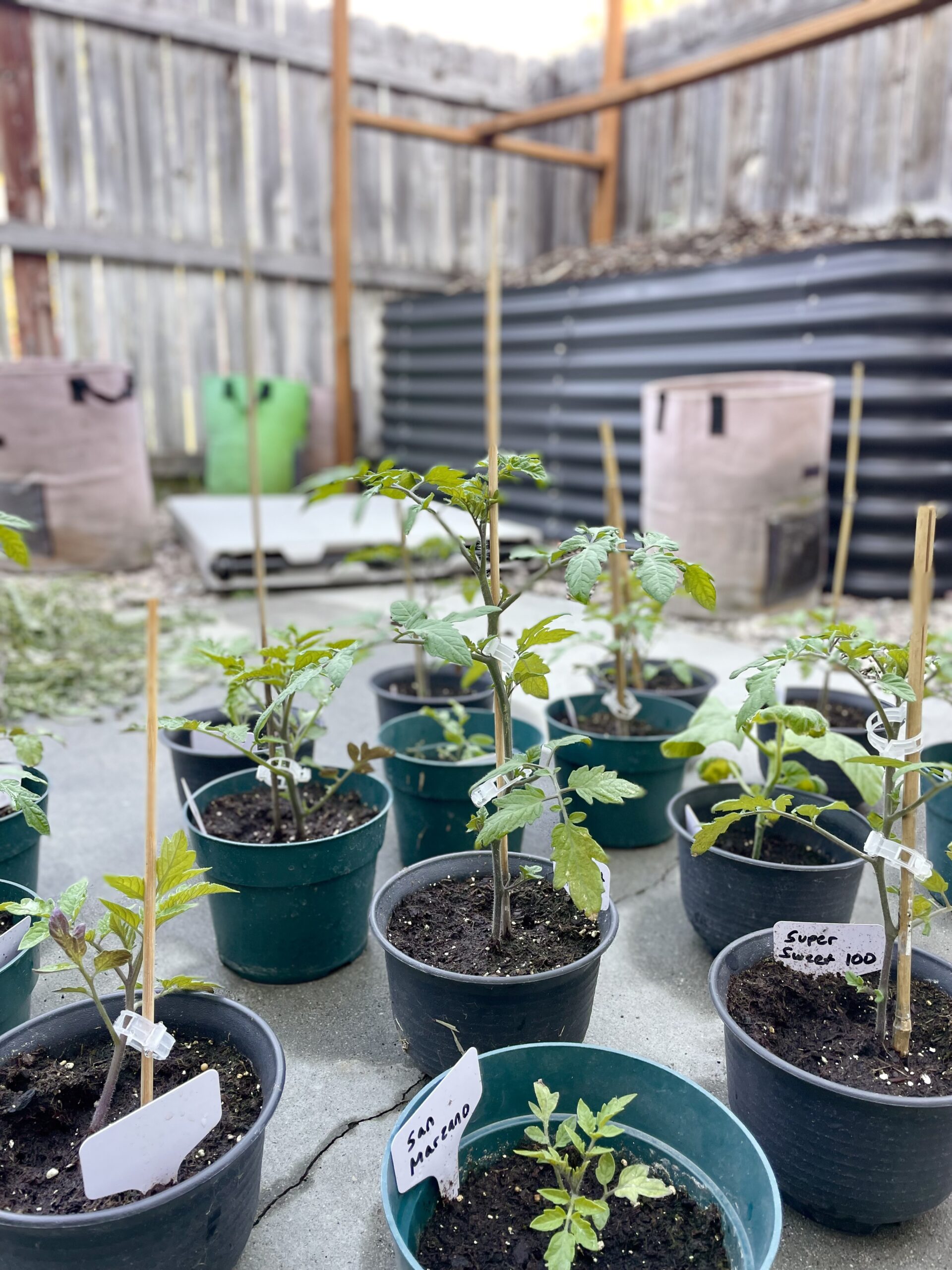
Timing is everything when it comes to up-potting. You want to do it early enough to avoid stress but not so early that it disrupts early root development. Here’s how to tell when it’s time:
- Your Seedlings Have True Leaves: The first leaves that emerge from a seed are called cotyledons—they’re not the plant’s real leaves. Once the plant develops its first true leaves (the next set, which look more like the mature plant’s leaves), it’s a good time to up-pot.
- Roots Are Emerging from the Drainage Holes: If you can see white roots poking out from the bottom of the container, that’s a clear sign the plant is running out of space and is ready for a larger pot.
- The Plant Looks Too Large for Its Container: If the leaves are overlapping the edges of the pot or the plant is starting to tip over, it’s likely outgrown its home.
- Soil Dries Out Rapidly: Small pots dry out faster, but if you’re watering every day (or more) and the soil dries within hours, it could mean the roots are taking up most of the space and there’s not much soil left to hold moisture.
- Slowed Growth or Yellowing Leaves: If your seedling seems to stop growing or the leaves are pale and dull, it might be root-bound and lacking nutrients or space.
Signs a Seedling is Root-bound
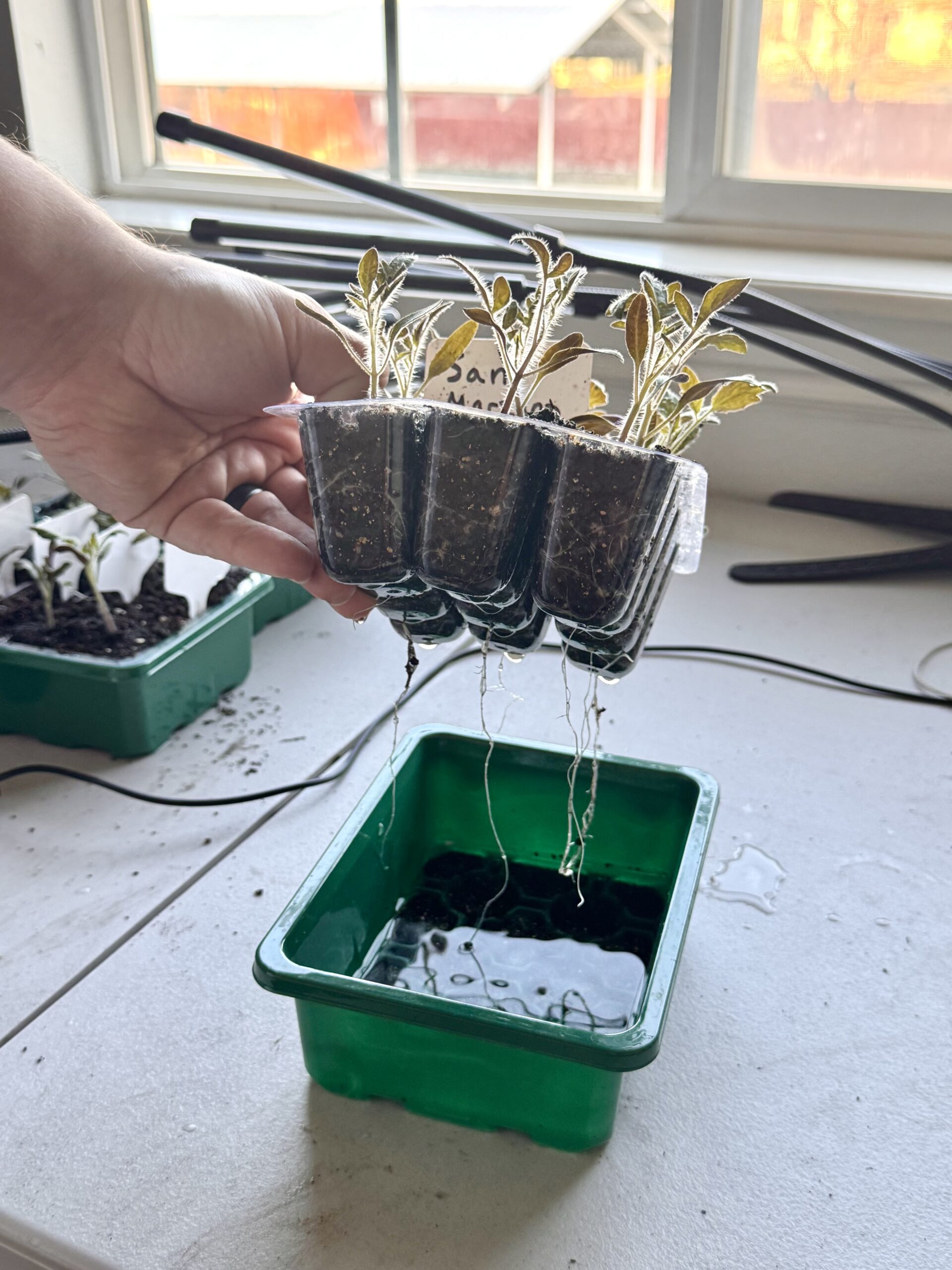
A plant becomes rootbound when it has been in a small container for too long and its roots have no more space to grow outward. Instead, they begin to circle around the inside of the container, sometimes forming a dense, tangled mass.
See the example below!

Here are some signs your plant is root-bound:
- Roots Circling the Bottom or Sides of the Pot: If you gently slide the plant out of its container, you might see a thick web of roots tightly wound around the soil.
- Stunted Growth: The plant may stop putting out new leaves or remain small and weak, even though it’s receiving water and light.
- Leaf Discoloration or Droopiness: Yellowing leaves, curling, or general dullness can be signs the roots can’t take up water or nutrients properly.
- Frequent Wilting: Even if you’re watering regularly, root-bound plants struggle to retain moisture, leading to quick wilting.
- Cracked or Deformed Containers: In extreme cases, the roots can become so dense they cause plastic pots to bulge or crack.
If your plant is root-bound, here’s what you can do:
- Gently loosen the root ball: Tease apart the circling roots with your fingers before transplanting.
- Trim if necessary: If the roots are very dense, you can trim some of them to encourage fresh growth.
- Up-pot promptly: Move the plant into a larger container with fresh soil and water it well.
Amendments to Consider When Up-Potting
I recommend two specific amendments when up-potting:
- Liquid fish fertilizer
- Mycorrhizae
Both of these can give your seedlings a serious boost – kind of like giving them a personal trainer for root development. Here’s a breakdown of both:
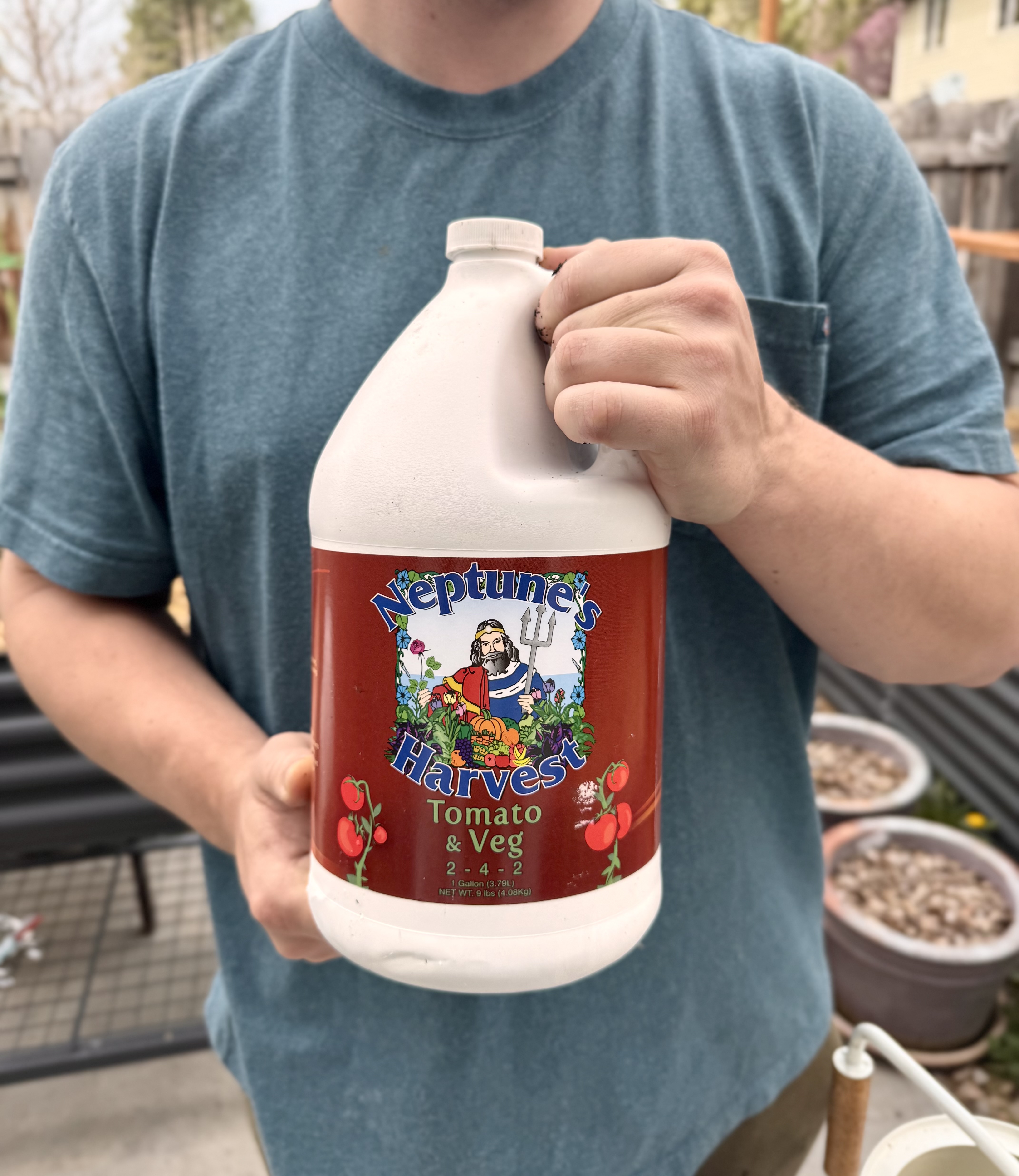
Liquid Fish Fertilizer
Liquid fish fertilizer is an organic, nutrient-rich plant food made from fish or fish byproducts. It’s usually processed into a liquid concentrate that you dilute with water and apply to the soil or directly to plant leaves (as a foliar spray). So what’s in it?
- Nitrogen (N): Promotes leafy growth—crucial for young seedlings.
- Phosphorus (P): Supports root development and flower/fruit production.
- Potassium (K): Helps with overall plant health and disease resistance.
- Trace minerals: Like calcium, magnesium, and iron, which are vital for plant processes.
- Amino acids & enzymes: Can help improve soil life and microbial activity.
Benefits When Up-Potting:
- Gentle, balanced nutrition for seedlings transitioning to a larger pot.
- Helps reduce transplant shock by strengthening plant resilience.
- Boosts microbial activity in the soil, supporting healthier root zones.
Pro tip: Use it diluted – typically 1 – 2 tablespoons per gallon of water – right after up-potting to feed the plant without overwhelming it.
Mycorrhizae
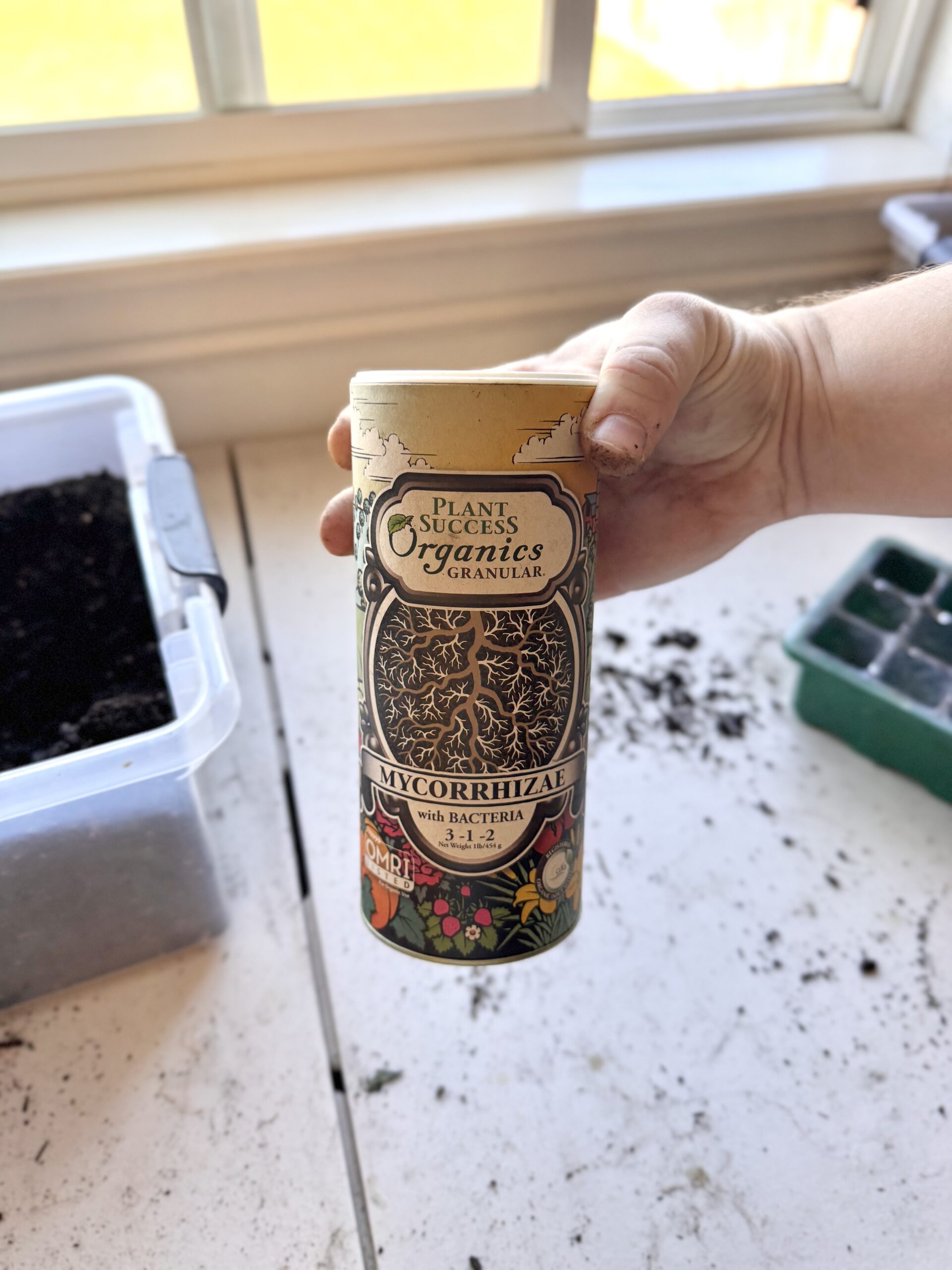
Mycorrhizae (plural of mycorrhiza) are beneficial fungi that form a symbiotic relationship with plant roots. They basically act like extensions of the root system, helping plants access water and nutrients – especially phosphorus – that roots might miss on their own. There are two main types:
- Ectomycorrhizae: Mostly for trees and shrubs.
- Endomycorrhizae (arbuscular): These are most relevant for vegetables; they penetrate the root cells and are ideal for most crops like tomatoes, peppers, squash, etc.
Benefits When Up-Potting:
- Increased nutrient and water uptake: Mycorrhizal fungi can expand a plant’s effective root area by up to 100x.
- Reduced transplant stress: Helps seedlings adapt more quickly to new soil environments.
- Improved drought resistance: Because water uptake becomes more efficient.
- Enhanced soil biology: Supports long-term soil health through better microbial interactions.
How to Use: Sprinkle mycorrhizal inoculant directly on the roots or into the planting hole when transplanting. It needs direct root contact to establish.
Combining liquid fish fertilizer and mycorrhizae is like giving your seedlings both instant fuel (fish fertilizer) and long-term support (mycorrhizae):
- The fish fertilizer feeds the seedling and also helps nourish the soil microbes – including the fungi.
- The mycorrhizae help the plant better access nutrients (including the ones in the fish fertilizer).
- Together, they create a more resilient, thriving root zone, setting your plants up for success after transplanting.
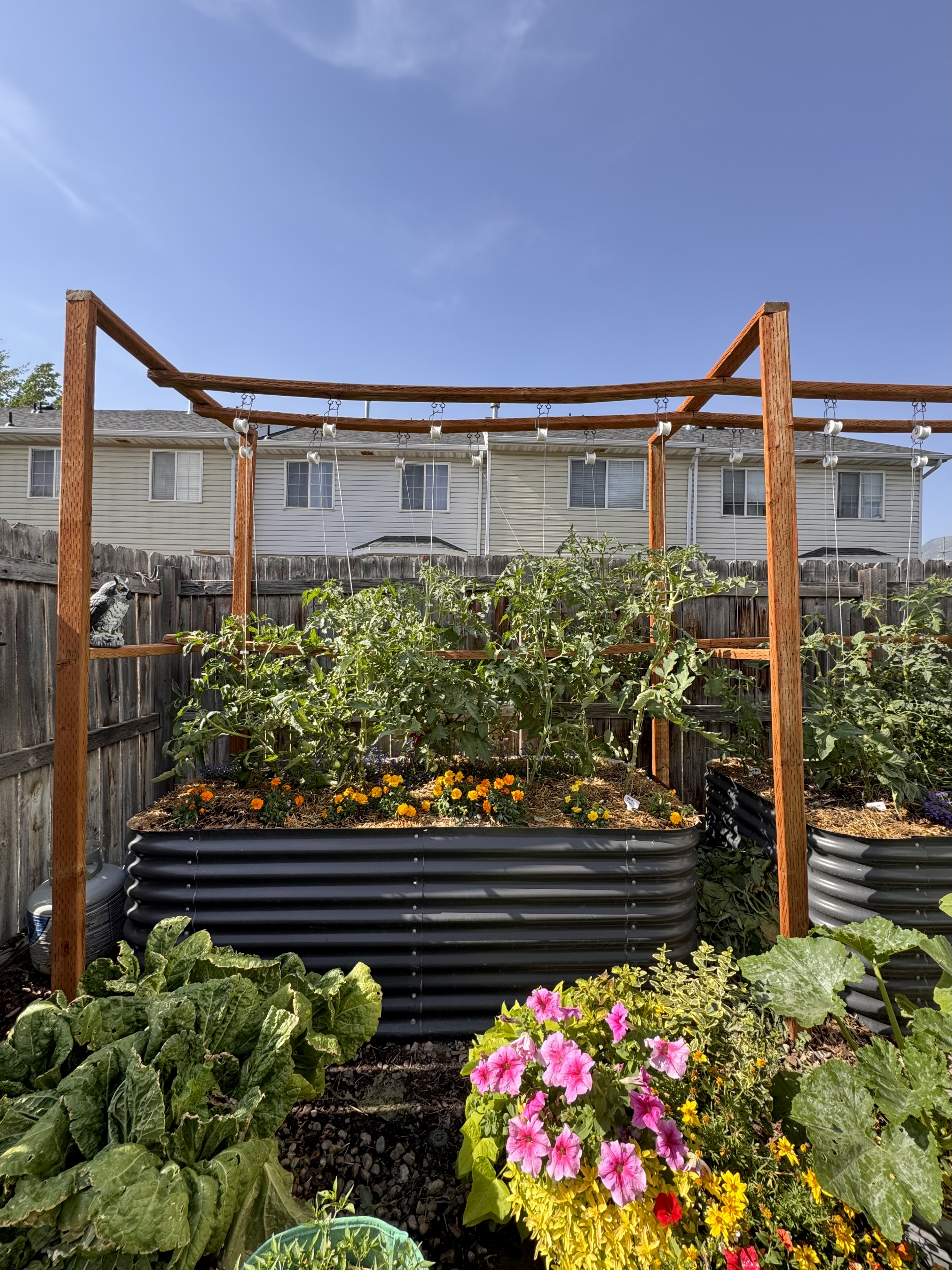
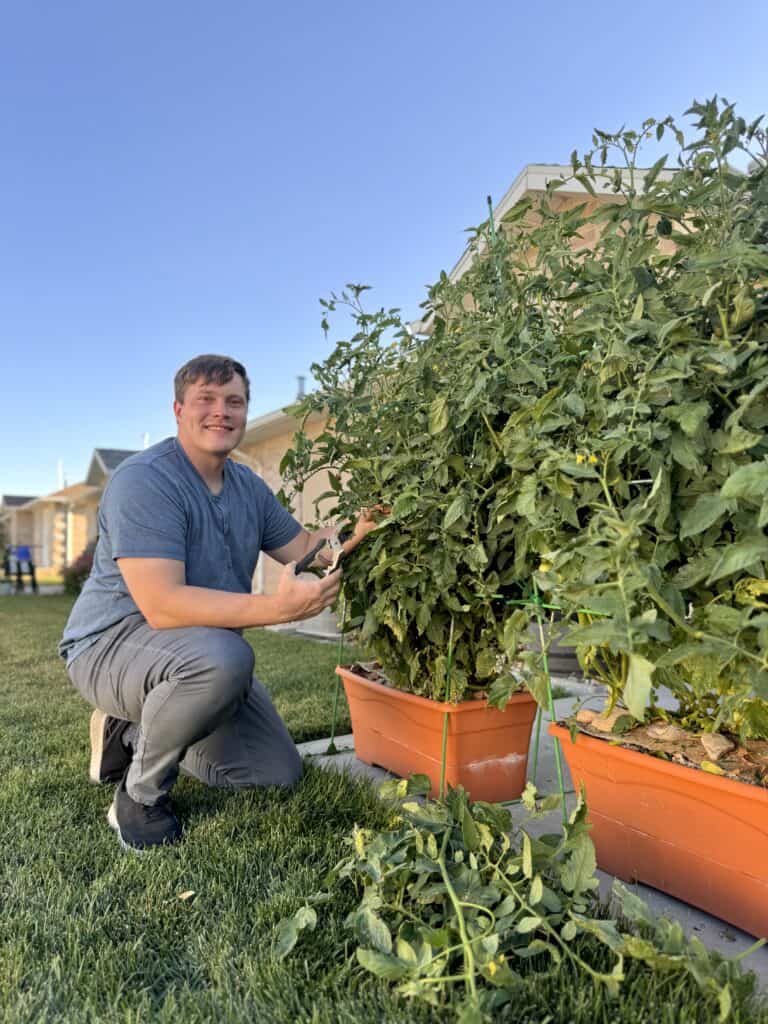



Potting up is so huge for root development! I also like to start in bigger containers if I have the space to save me time later.
Loved the reminder not to disturb the root ball too much. My plants handled the move really well.